🇬🇧Hi/Bonjour Everyone! I hope this finds you well! Time really flew by since I last wrote.
Feature Film
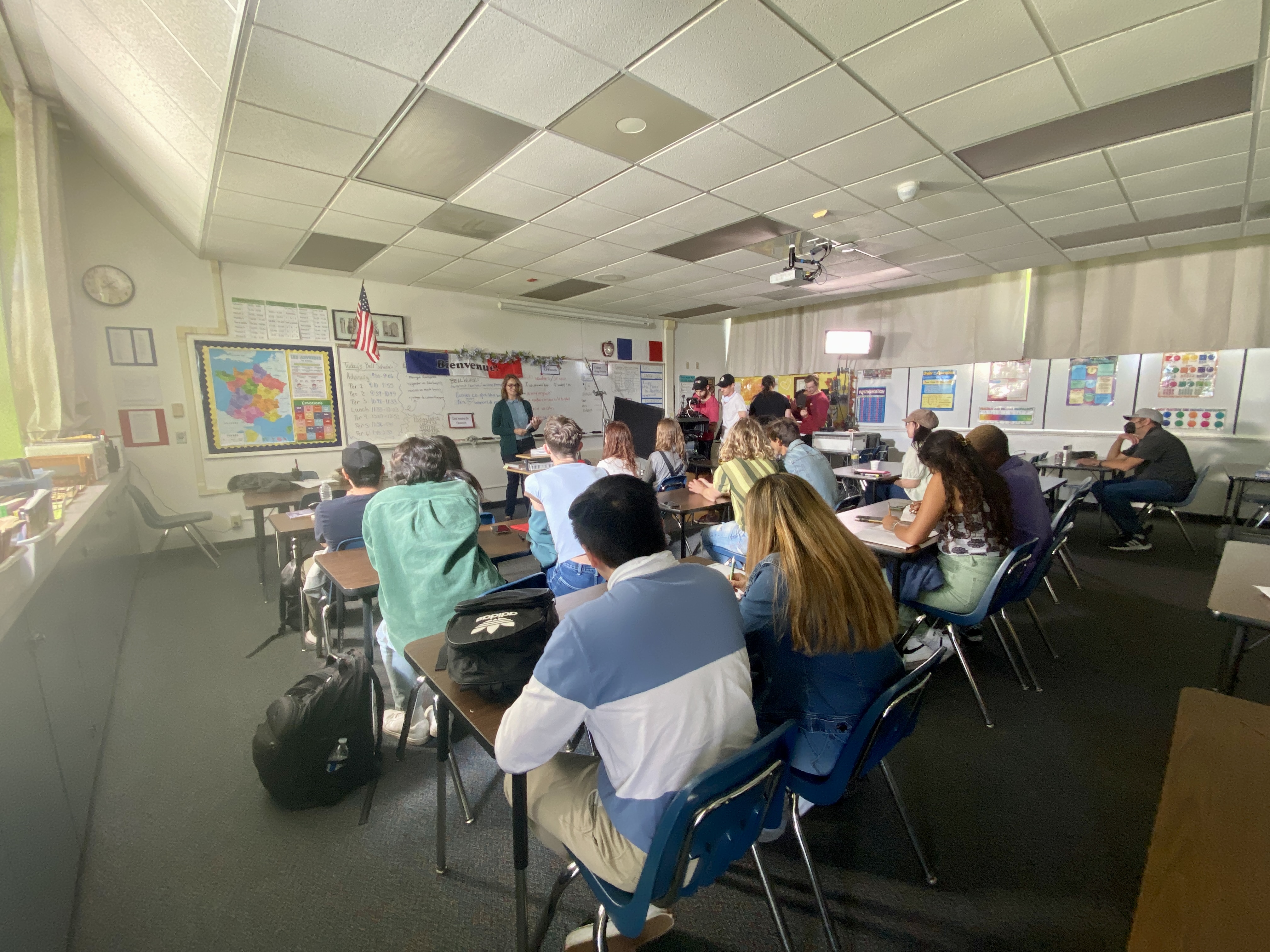
I was fortunate to be cast in an upcoming feature film called Riley by Benjamin Howard. I portrayed a French Teacher. The cast and crew was absolutely wonderful and kind. It was a very special set.
MCTC
I’m wrapping up the semester on my Makeup for the Stage Class with Mesa College Theater Company. It is fascinating! Here are some samples of the work I’ve done from Period makeup such as the 1920’s to Character makeup such as The Mother of Baby Yoda I’m having a ton of fun! Next will be makeup injuries!


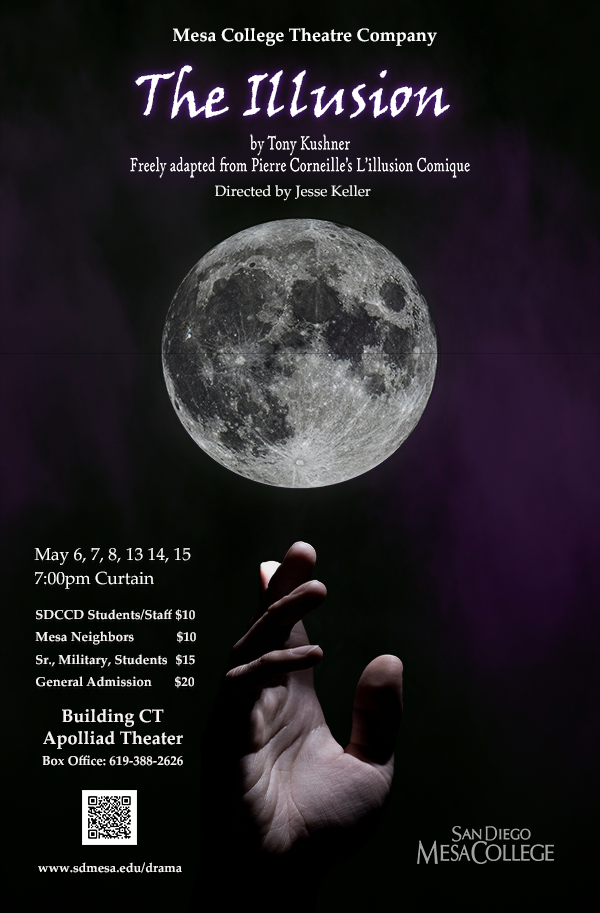
I’ve been fortunate to be assigned the role of Assistant Director on the play The Illusion as well as being an understudy for the character Alcandre, the magician in the play. My duties were to study the play from every angle possible, assist the director, Jesse Keller and accompany the actors in finding their characters and running their lines and practice exercices with them. I love to share my passion with fellow artists! This play is really dear to my heart. Everyone has been a delight to work with!
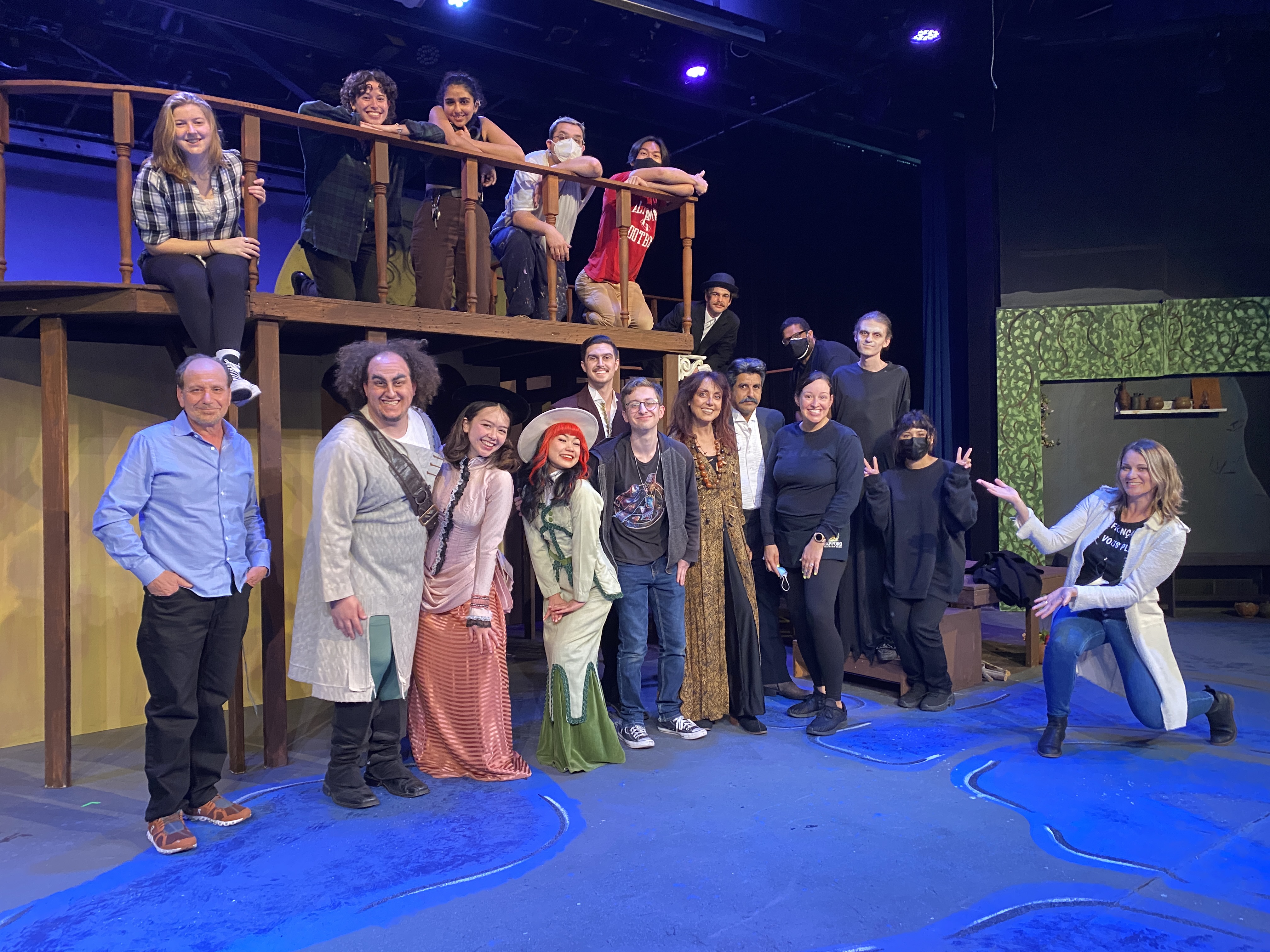
The Illusion by Tony Kushner (1991) versus L’Illusion Comique by Pierre Corneille (1636)
Or when two playwrights from different times decide to tell you about the flow of time in the heart of theater, but is there really one when it comes to the human experience?
I signed up for this semester’s Literature to Life class with little idea about what it would involve but for the opportunity to audition for and to be involved in the production of The Illusion, by Tony Kushner. Kushner adapted the play freely from the play L’Illusion Comique by Pierre Corneille. I’d heard about it last semester as part of another class I was taking online. It got me interested as my first language is French (I was born in Paris and grew up in the French part of Switzerland) and rare are the opportunities to see French plays transcribed on American soil and more so with a “je ne sais quoi”.
My first reading of both versions of the plays was thanks to this class, I’m a latecomer! I was initially a bit shocked by the liberties Tony Kushner took in adapting the play while keeping in mind that modern times play a role in its writing. I am very protective… Yes, Madame Liberty… Anyway, remember that after all 3 centuries have passed since the original version of Pierre Corneille, the essential is clearly there. It’s an amazing reminder of life!
After attending the rehearsals and seeing my fellow classmates practice their respective beats, while seeing the costume, set, sound, and lighting departments racing to be ready there was a moment that we all shared among actors during rehearsal. It happened after the character Lyse says to Matamore “you catechize me”…A moment in which we all let go. It was clearly an “ah ah moment”.
There’s a clear analogy that Kushner is giving us through the lines of his characters. The words she chooses to use and insists on repeating in different ways all along the play in that cave are important. We are talking about higher intelligence here, about elevation, perhaps about our relation to God, to each other, to life, about the human experience. How art, theater makes you access the flow of emotions and that’s why this art form exists and, that’s why we as an audience sit there, to be reminded of life, love, time, to be, to feel.
Kushner added a lot of references to birds and prey, particularly to the hawk, in his version. Is it because this raptor has an incredible vision? Or is it about having a bigger vision? Or because it adds some hunting tension? Not sure, yet the French version doesn’t have it. It’s rawer.
The play is a mix of different styles. The original author shines through his writing in verse while excelling in all theater genres. The first act in the French version is a prologue, the next three acts are what we would call a comedy, far from being perfect with a strong sense of commedia dell’arte, especially with the Character Matamore. And there’s the tragedy with rivalry, imprisonment and death. All wrapped together it makes it a comedy. I guess it depends how one wants to look at it.
To know about a play one needs to know about its playwright. I learned that Pierre Corneille studied law and that he practiced in the parliament of Rouen (near where my grandmother used to live) in 1624. But he struggled with an attraction for writing poetry and drama. The Cardinal Richelieu chooses him among 5 authors to work under his protection but Corneille decides to go freelance and writes his most original comedy (l’Illusion comique, 1636), which had for a goal to elevate theater to the society.
I found the French version more conciliant towards the father who truly cares about finding his son while the American version shows a father who has traits that are quite selfish and don’t make us feel much sympathy for him. Even in the end “Pridamant” seems to be, pardon my French, an ass. In the French version, Pridamant isn’t and understands finally the world his son chose to live in because he made him feel. I could sense a certain pride too. In the American version the father feels but I’m not sure it changed him. One step at a time…
In life Pierre Corneille’s father was a lawyer, as was Pierre Corneille and as is Pridamant in the play. Are the playwrights confronting themselves with Pridamant’s lines?! I especially like the challenging line of Alcandre to Pridamant “Let’s say your son married early or settled young to a dull marriage – a dreadful lawyer would say how flat, how inelegant that would have been.” Kushner was writing Angels in America when he wrote The Illusion. He is quite a playwright with a neurotic edge, which we can recognize in the character Pridamant too. Is he him?!
There are 3 plays within the play in the American version when in the French it’s only two. Tony Kuschner created more confusion by changing the names of the characters while keeping the story arc. What he did is that he involved the father much more in the play with him commenting often throughout the actions he was seeing unfolding and played with his nerves, he also gave it a slightly different ending.
The French version counts: Alcandre, Pridamant, Matamore, “Capitan Gascon”, Clindor, Adraste, Geronte, Isabelle, Lyse, Geolier de Bordeaux, Page du Capitan, Theogenes, Hyppolyte.
The American version counts: Alcandre, Pridamant, Matamore, Clindor, Adraste, Geronte, Isabelle, Lyse, Theogenes, Hippolyta, Calisto, Melibea, Elicia, Clarina, Prince of Florilame, Amaneuensis.
Kushner added famous characters from other sources such as Calisto and Melibea which is the name of the female lover in La Celestina, a famous Spanish novel. The characters Melibea and Calisto follow a fate similar to that of Shakespeare’s Romeo and Juliet.
The first act in the French version seems to be a prologue. It starts with Pridamant asking for help to his friend Dorante who doesn’t appear in Tony Kushner’s version. Pridamant worries about his son who left his home 10 years ago. Dorante refers the magician Alcandre to him to seek help. Alcandre the magician shows costumes to Pridamant and tells him that he can create illusions through them so he can see what his son’s life is like. Alcandre starts telling the story of Clindor to Pridamant telling him that his life improved since he started working for Matamore.
The first act of the American version starts straight with Pridamant looking for the magician Alcandre in the cave. Pridamant meets the Amanuensis, Alcandre’s servant which doesn’t exist in the French version. That poor guy.
Theater is where the Magic happens. Is that why Corneille had a magician in his play and that Kushner in his version gave so much emotions to her monologues? For this diamond dolorosa (tear) or to remind us that life is a theater…? Or that the profoundest matter of life is love?!
Joshua Tree Solo Festival
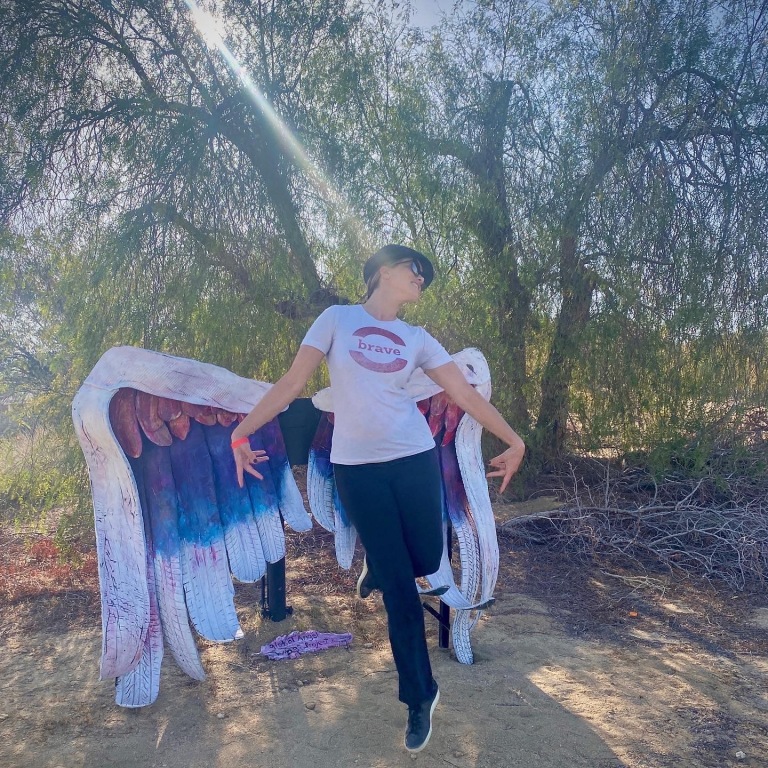
I feel creatively inspired and elated as I was invited to attend a short festival with a community of solo artists in Joshua Tree. I’ve been writing my solo show and this was the perfect setting to be surrounded by, being a part of and watching creative minds. I’m grateful for all the sharing and the writing practice. Thanks Jessica Lynn Johnson from the Soaring Solo Artist and Kevin Bone!



*****
🇫🇷Hi/Bonjour à tous ! Comme le temps a filé depuis mon dernier blog !
Long-Métrage
J’ai eu la chance de tourner dans le magnifique long-métrage intitulé Riley de Benjamin Howard. J’y tiens le rôle d’une prof de français. Toute l’équipe était incroyable et très serviable. C’était un plateau de tournage très spécial dont je garderai un excellent souvenir.
MCTC
Je termine ce semestre une classe de maquillage pour la scène avec la compagnie Mesa College Theatre Company. C’est fascinant ! Voici quelques exemples du travail que j’ai réalisé. Du maquillage d’époque comme les années folles de 1920 au maquillage de personnages comme La mère de Baby Yoda. Oui, je m’amuse beaucoup ! Prochain chapitre: Les blessures !
J’ai eu la chance de me voir confier le rôle d’assistante du metteur en scène sur la pièce The Illusion ainsi que d’être la doublure (Covid oblige) du personnage d’Alcandre, le magicien dans cette même pièce de théâtre. Mes tâches étaient d’étudier la pièce sous tous les angles possible, d’assister le metteur en scène, Jesse Keller et d’accompagner les comédiens dans la recherche de leurs personnages, la mise en scène de leurs répliques et la pratique d’exercices avec eux. J’aime partager ma passion avec d’autres artistes ! Cette pièce me tient vraiment à cœur. Ce fut un grand plaisir de travailler avec tout le monde !
The Illusion de Tony Kushner (1991) versus L’Illusion Comique de Pierre Corneille (1636)
Ou quand deux dramaturges d’époques différentes décident de vous parler de l’écoulement du temps au cœur du théâtre, mais y en a-t-il vraiment un quand il s’agit de l’expérience humaine ?
Je me suis inscrite au cours de “La littérature à la vie” de ce semestre avec peu d’idée de ce que cela impliquerait sauf pour l’opportunité d’auditionner et d’être impliquée dans la production de The Illusion, de Tony Kushner. Kushner a librement adapté cette pièce de la pièce L’Illusion Comique de Pierre Corneille. J’en avais entendu parler le semestre dernier dans le cadre d’un autre cours que je suivais en ligne. Cela m’a intéressée car ma première langue est le français (je suis née à Paris et j’ai grandi en Suisse romande) et rares sont les occasions de voir des pièces françaises transcrites sur le sol américain et plus encore avec un “je ne sais quoi” .
Ma première lecture des deux versions des pièces a eu lieue grâce à cette classe, je suis une retardataire dans le métier ! J’ai d’abord été un peu choquée par les libertés que Tony Kushner a prises en adaptant la pièce tout en gardant à l’esprit que les temps modernes jouent un rôle dans son écriture. Je suis très protectrice… Oui, Madame Liberty… Quoi qu’il en soit, rappelez-vous qu’après tout 3 siècles se sont écoulés depuis la version originale de Pierre Corneille, l’essentiel est clairement là. C’est un incroyable rappel de la vie !
Après avoir assisté aux répétitions et que mes collègues aient trouvé leurs rythmes respectifs, tout en voyant les départements: Costumes, décors, son et éclairage se précipiter pour être prêts, il y a eu un moment que nous avons tous partagé entre acteurs pendant une répétition. C’est arrivé après que le personnage Lyse ait dit à Matamore “Vous m’avez catéchisée”… Un moment où nous avons tous lâché prise. C’était clairement un « ah ah moment » comme on les appelle.
Il y a une analogie claire que Kushner nous donne à travers les lignes de ses personnages. Les mots que le magicien choisit d’utiliser et insiste de répéter de différentes manières tout au long de la pièce, dans cette grotte sont d’une grande importance. Nous parlons ici d’intelligence supérieure, d’élévation, peut-être de notre relation à Dieu, à l’autre, à la vie, à l’expérience humaine. Comment l’art, le théâtre vous permet d’accéder au flux de vos émotions et c’est pourquoi cette forme d’art existe et, c’est pourquoi nous, en tant que public, nous nous asseyons sur ces sièges, pour nous rappeler de la vie, de l’amour, du temps, d’être, et de ressentir.
Kushner a ajouté de nombreuses références aux oiseaux et aux proies, en particulier au faucon, dans sa version. Est-ce parce que ce rapace a une vision incroyable ? Ou s’agit-il de nous rappeler d’avoir une vision plus large ? Ou parce que cela ajoute une certaine tension de chasse ? Pas certaine, mais la version française ne l’a pas. Elle est plus…nue.
La pièce est un mélange de différents styles. L’auteur original brille de par son écriture en vers tout en excellant dans tous les genres théâtraux. Le premier acte de la version française est un prologue, les trois actes suivants sont ce qu’on appellerait une comédie, loin d’être parfaite avec un fort sens de la commedia dell’arte, notamment avec le personnage Matamore. Et il y a la tragédie avec la rivalité, l’emprisonnement et la mort. Le tout ensemble, en fait une comédie. Je suppose que cela dépend de la façon dont on veut le voir…
Pour connaître une pièce, il faut connaître son auteur. J’ai appris que Pierre Corneille avait étudié le droit et qu’il avait exercé au parlement de Rouen (près de chez ma grand-mère maternelle…Petite note personnelle) en 1624. Mais il se débattait avec une attirance pour la poésie et le théâtre. Le cardinal de Richelieu l’avait choisi parmi 5 auteurs pour travailler sous sa protection mais Corneille décida de se mettre à son compte et à ce moment ci écrit sa comédie la plus originale – l’Illusion comique, 1636, qui avait pour but d’élever le théâtre à la société.
J’ai trouvé la version française plus conciliante envers le père qui se soucie vraiment de retrouver son fils alors que la version américaine montre un père qui a des traits assez égoïstes et qui ne nous font pas ressentir beaucoup de sympathie pour lui. Même au final “Pridamant” semble être, pardonnez mon français, un mufle. Dans la version française, Pridamant ne l’est pas et comprend enfin le monde dans lequel son fils a choisi de vivre parce que grâce à celui-ci, il a ressenti quelque chose. Son coeur de granite s’est assoupli. Je pouvais sentir une certaine fierté aussi. Dans la version américaine, le père ressent des émotions mais je ne suis pas sûre qu’il ait été métamorphosé. Un pas après l’autre…
De son vivant, le père de Pierre Corneille était avocat, tout comme Pierre Corneille et comme Pridamant dans la pièce. Les dramaturges se confrontent-ils aux répliques de Pridamant comme s’ils se parlaient à eux-mêmes ?! J’aime particulièrement la ligne provocante d’Alcandre à Pridamant: “Disons que votre fils se soit marié tôt ou qu’il se serait installé très jeune dans un mariage ennuyeux – un avocat épouvantable dirait à quel point cela aurait été plat, à quel point cela aurait été inélégant.” Kushner écrivait Angels in America quand il a écrit The Illusion. C’est un sacré dramaturge avec une pointe névrotique, que l’on retrouve aussi dans le personnage de Pridamant. Serait-ce lui ?!
Il y a 3 pièces dans la pièce dans la version américaine quant à la version française il n’y en a que deux. Tony Kuschner a créé plus de confusion en changeant les noms des personnages tout en gardant l’arc de l’histoire. Ce qu’il a fait, c’est qu’il a beaucoup plus impliqué le père dans la pièce en le faisant intervenir souvent tout au long des actions qu’il voyait se dérouler et en jouant avec ses nerfs. Tony Kushner donne à cette pièce une autre fin.
La version française compte : Alcandre, Pridamant, Matamore, « Capitan Gascon », Clindor, Adraste, Géronte, Isabelle, Lyse, Géolier de Bordeaux, Page du Capitan, Théogène, Hyppolyte.
La version américaine compte : Alcandre, Pridamant, Matamore, Clindor, Adraste, Geronte, Isabelle, Lyse, Theogenes, Hippolyta, Calisto, Melibea, Elicia, Clarina, Prince of Florilame, Amaneuensis.
Kushner a ajouté des personnages célèbres d’autres sources telles que Calisto et Melibea, qui est le nom de l’amante dans La Celestina, un célèbre roman espagnol. Les personnages Melibea et Calisto suivent un destin similaire à celui de Roméo et Juliette de Shakespeare.
Le premier acte de la version française semble être un prologue. Cela commence par Pridamant demandant de l’aide à son ami Dorante qui n’apparaît pas dans la version de Tony Kushner. Pridamant s’inquiète pour son fils qui a quitté son foyer il y a 10 ans. Dorante lui réfère le magicien Alcandre pour demander de l’aide. Alcandre le magicien montre des costumes à Pridamant et lui dit qu’il peut créer des illusions à travers eux afin qu’il puisse voir à quoi ressemble la vie de son fils. Alcandre commence à raconter l’histoire de Clindor à Pridamant en lui disant que sa vie s’est améliorée depuis qu’il a commencé à travailler pour Matamore.
Le premier acte de la version américaine commence tout droit avec Pridamant à la recherche du magicien Alcandre dans la grotte. Pridamant rencontre l’Amanuensis, le serviteur d’Alcandre qui n’existe pas dans la version française. Ce pauvre gars !
Le théâtre est l’endroit où la magie opère. Est-ce pour cela que Corneille avait un magicien dans sa pièce et que Kushner dans sa version a donné tant d’émotions à ses monologues ? Pour ce diamant dolorosa (référence à une larme dans la pièce) ou pour nous rappeler que la vie est un théâtre… Ou pour nous rappeler que la question la plus profonde de la vie est l’amour ?!
Joshua Tree Solo Festival
Je me sens créativement inspirée et ravie car j’ai été invitée à assister à un court festival avec une communauté d’artistes solos à Joshua Tree. J’écris un one woman solo show et ce cadre était idéal ! J’ai été entourée, eu la chance de faire partie et d’observer des esprits créatifs. C’était beaucoup de partages et des exercices pratiques d’écriture. Merci à Jessica Lynn Johnson de Soaring Solo Artist et à Kevin Bone !
 CaroLine Style
One thought